'Backrooms' Is a Terrifying Examination of Failure
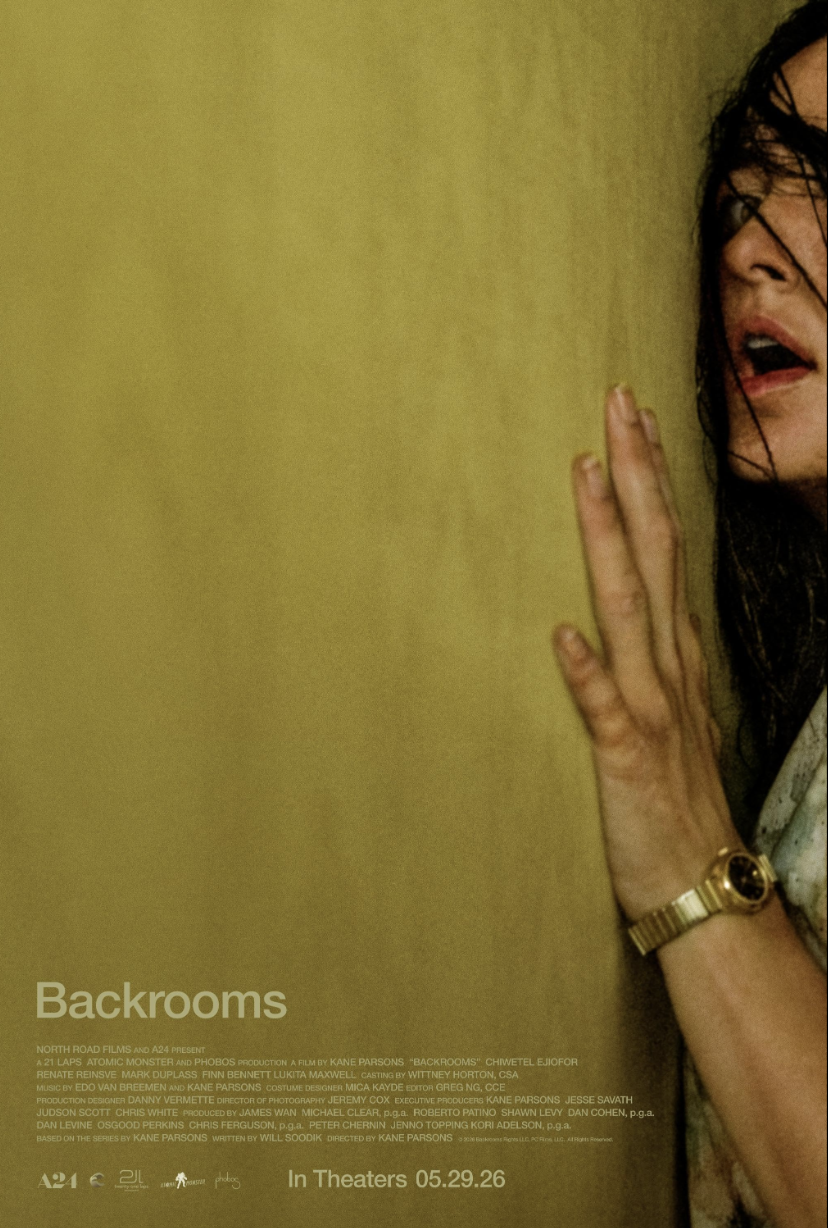
How to do horror properly. Folks like to use the term “elevated horror,” which is a coy way of saying “not another dumb slasher.” Recently, horror has been making a comeback. Through The Substance, to Pearl, to Sinners horror is opening up doors to the darkest recesses of the mind in a popular fashion we haven’t seen before. Perhaps it's because movies are a reflection of the times we live in, and for anyone in the US fearing another pandemic, economic collapse, terrorist attack, or nuclear war, movies like this mirror the hopelessness we’ve been feeling every day since 2016. Backrooms isn’t just a scary movie; it’s an examination of what happens to our lives as we get older.
Like any good filmmaker, the director must tell a story that feels personal. Even if it’s about a superhero, there has to be an element that the director tells the audience that they feel the same way the protagonist does, because to some extent, they’ve been there. At this point, half the audience seeing this movie knows of the director’s age. At 21 (or 20), Kane Parsons was likely 19 when he started work on this movie, making him the youngest director to have a major motion picture reach nationwide distribution. Backrooms is a movie about a man who’s in his forties or fifties whose life has passed him by. Clark (Chiwetel Ejiofor) is the owner of a furniture store that gets hardly any visitors. Clark wanted to be an architect. Yet things didn’t turn out the way he wanted. Clark can’t accept it when people tell him he’s not an architect, as he bursts into fits of anger when faced with a plate of cold reality.
Soon, reality becomes a questionable factor when Clark finds a wall in the basement of his store that leads to another dimension. This dimension is one of the most minimalistic settings one could conceive for a movie. The dimension is simply a collection of never-ending rooms. There’s hardly anything there other than large areas of white walls. It’s basically an abandoned shopping mall, with no dilapidated signs hanging around. The design of the rooms is unsettling, and we’ve all seen them, making us question whether there’s something wrong with them. To emphasize an unsettling atmosphere, the picture alternates between conventionally shot digital footage and DV cam footage. Don’t worry, it makes sense in the context of the story and isn’t mixing formats for the sake of being different. Even better, Backrooms shows intentionality in almost every shot. It’s not simply shooting wide with over-the-shoulder angles. The depth of field is almost exclusively wide, giving the audience a sense of isolation despite being surrounded by endless miles of space.
To make things even scarier, the sound design is brilliant. The sound from the humming fluorescent lightbulbs is like a headache you can’t shake from work. For anyone who’s ever worked in retail, you’ll really know what that buzzing noise is like. It’s not just an irritating sound; it’s your conscience continually telling you that you’re a failure, and this noise will be burned into your skull up until your final dying breath.
Clark’s rooms aren’t just a cheap horror tool to spook audiences. It’s Kane Parsons expressing his fear of what would happen to him if he didn’t discover Adobe After Effects and become a successful filmmaker. Clark represents every person who has faced the disappointment that 90% of us feel in our everyday lives. It’s not just sad. It’s terrifying. Every day you wake up to your own horror as you get up, clock in for work, then feel miserable for 9-12 hours a day, waiting to get home so you can drown your problems in liquor to stop all those negative thoughts of self-loathing from entering your consciousness.
You try to make your problems go away by talking to your therapist, but they can only help you if you’re capable of finding tranquility in yourself. If therapy universally worked, then most of us wouldn’t need it, let alone some with mental instability that relies on it like a drug. Clark is told by his therapist, Mary (Renate Reinsve), that perhaps his brain is wired differently; there’s nothing in that statement that can help him. It’s impossible to rewire a brain’s function. Mary tries her best to be an effective therapist, but we’re often ill-equipped to help each other because we’re our own people with our own methods of healing the mind. Charles Darwin was right. Only the strong survive. In Clark’s case, he’s simply not mentally fit to be a big success in this world.
One could feel a bit of snarky jealousy towards this assessment of the themes Parsons is trying to communicate. Backrooms is a movie coming from a baby who thinks he can tell other people to achieve their dreams like him, when in fact most of us just aren’t that talented. Not everyone has the brain wiring to figure out After Effects, or knows how to competently direct a movie. Yet Kane has done it. If you’re bitter that Kane Parsons was a young kid who accomplished his dreams while you're sitting in some soul-sucking office job, just remember that Steven Spielberg made it in his early 20s as well. You’re likely never going to get anywhere, despite what all the Oscar speeches and Nike commercials tell you.
The real horror in Backrooms isn’t the creepy, deformed faces or empty spaces; it’s the thought that we’re like Clark. Life is a horror movie for us. We mostly work with the vague hope of retiring one day just to die soon afterward. It’s not much of a life worth living, but it’s better to have some existence than no existence. If Kane Parsons turns out to be more than a one-trick pony director, then we may have more Lynchian films from Parsons to look forward to. Take note, older directors. You don’t need jump scares or gore to terrify your audience. You merely need a resonant theme. Once you have that down, the rest of the story will come more naturally to you.