'You Can See Everything' Yet Nothing
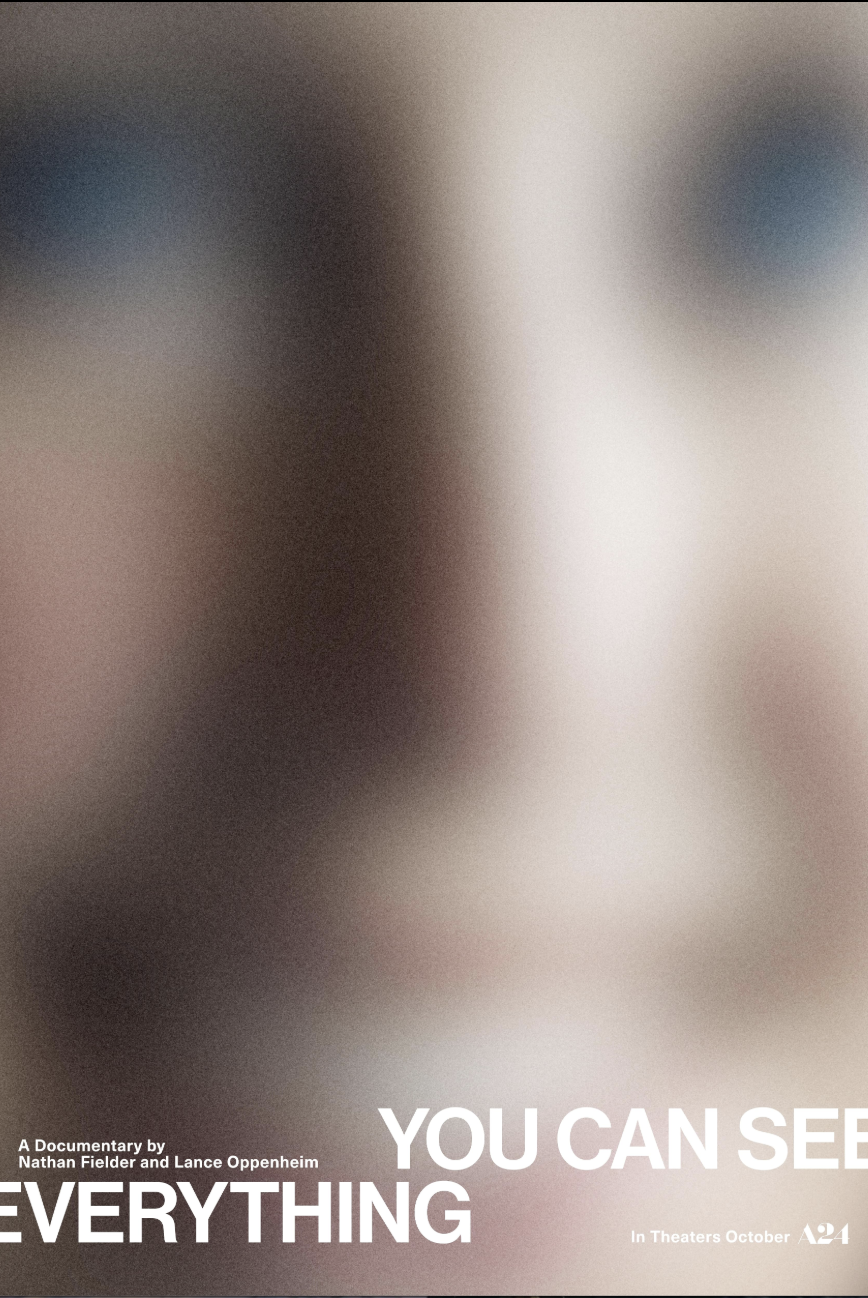
Don’t let trailers deceive you. You Can See Everything aspires to what more documentary filmmakers should try to do. Understand its subject. Most filmmakers would approach the subject of fallen billionaire Elizabeth Holmes with a “stop the monster” type of picture. There’s no reason someone would feel bad for a person who profited from scamming millions of people. The picture is unconventional, with both advantages and a slight disadvantage. It’s hypnotic if not manipulative. Yet it’s aware it’s manipulating the audience, making us question what's true and what is fiction. A one-of-a-kind documentary that isn’t too heavy and is even partially a comedy.
The film feels like an extended version of that Curb Your Enthusiasm bit where Larry David stares at someone in disbelief. It’s meant to be funny. But it’s also serious. The audience wants to hate Elizabeth Holmes because she comes across like a lying sociopath. She’s always wearing a mask. Her smile never breaks for a single second throughout the picture until she reaches her darkest moment. Elizabeth Holmes founded Theranos, a healthcare company that distributed machines across the country. At your local Walgreens, you could use this machine to take a single drop of blood to see if you’re okay. No needles needed. As you could guess. The machine was a load of crap. Most products were manufactured by third-party companies and distributed with a Theranos label slapped on them. Somehow, this movie assumes the audience already knows the full backstory, as Holmes became a tabloid sensation. Some folks, though, might not be caught up on who Holmes is. The brief montage of her rise and fall wasn’t detailed or deep enough to show the extent to which her products led to disastrous results. Even death by suicide from a Theranos scientist when the company dissolved isn't included in the movie.
As she stands by her belief that her product can pass any scientific test, Co-Director Nathan Fielder questions everything Elizabeth has said, but does so with brutal honesty. He’s not afraid to be upfront and challenge his subject. After all, Holmes gave him unparalleled access to their house, days before she was sentenced to prison. If the movie is meant to expose all, it certainly does, even to the extent that we see a man fully exposed in the shower. The film is extremely meta. And does a much better job of being it than Digger did. Yet, like that movie, it stumbles a bit in its own style.
Why does the director make himself so prominent in the movie? Is it about him or is it about Elizabeth? By the middle act, the movie is almost too fixated on making its director the star instead of the subject. Yet when everything comes full circle, it all makes sense why Fielder took that approach. Furthermore, Fielder’s lack of a poker face reflects what the audience is thinking whenever Elizabeth speaks.
The plot takes unexpected turns that usually end up in headlines rather than a documentary. Yet even as villainous as the picture’s antagonist is, we understand people through Fielder’s perspective. He’s clearly driving the narrative of a movie that is neither documentary nor movie. It’s more of a blend that’s partially an upgrade from the old reenactments we get from the History Channel. At certain points, though, the dialogue and sequence of events are so timed and spot-on that it feels like it could have been scripted. The film is cinematic. We’ve reached a point where movies, television, and documentaries all share similar production values. Primetime composer Ari Balouzian teams up with Lance Oppenheim again to provide a score that’s one of the year’s best and is certain to give him an Oscar nomination. The score pulses with energy and foreboding. The on-screen images are gorgeous and unsettling. It’s doubtful the movie was always shot in natural light, despite what camera ISOs can do these days.
The camera frames its subjects uncomfortably close. We can basically smell Nathan’s breath. The picture is like an interrogation, yet it’s proving that people aren’t who they seem. Elizabeth is an incredibly manipulative person who gained her wealth through her father at Enron. Her values were twisted from birth; Liz becomes evil just like our President. But she’s not entirely evil. There’s some humanity in her that the movie shows. Liz has been used and manipulated by others to the point that we can understand why she’d commit the crimes she does. It’s not fair, but in a world full of people hurting each other, we want to inflict that pain back on the people who hurt us. Most of us have the strength to use that pain to help others. Yet few of us are born with the access and power to do whatever we want. What happens when bad people with millions of dollars influence their children? And what happens when society reinforces those warped values?
At the end of the movie, we’re meant to feel mixed about Liz. She’s complicated. Just like people are, they do wrong; they hurt people, but which of them are monsters? It’s hard to judge someone when we know what they’ve been through. Yet, actions have consequences. But will Liz learn from her punishment? Good movies challenge the audience, leaving more questions than answers. Not all good movies. Spielberg loves answers, and those pictures deserve their place. But most good movies should have us look at ourselves.
You Can See Everything opens in theaters nationwide this Friday.