'Whalefall' Asleep
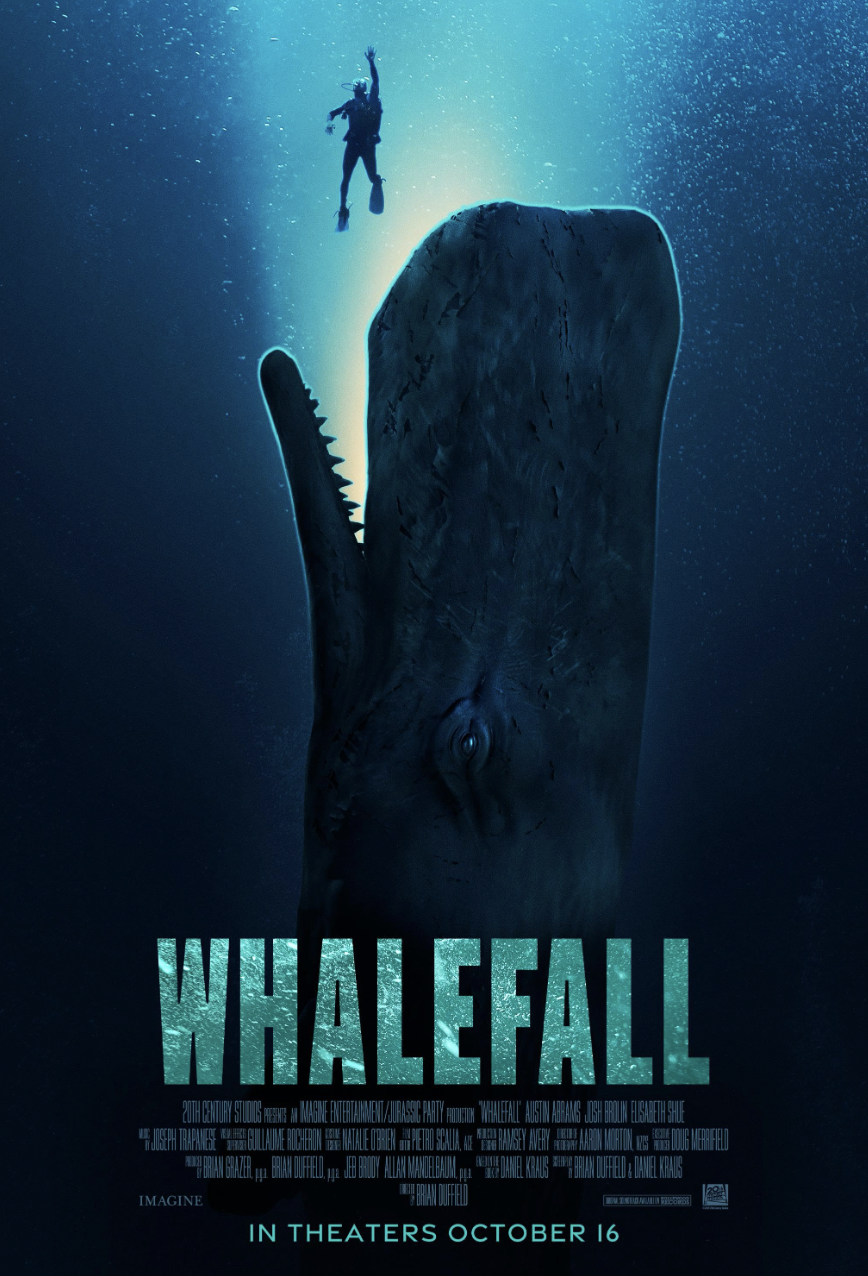
Audiences will likely love this movie. I didn't. Whalefall is a soapy, sentimental movie that drives traditional points home with no real energy. The concept is an updated Pinocchio where someone gets trapped inside a whale. Can people really get trapped inside a whale? Or is that just something that's in cartoons? The idea seems preposterous. The picture plays its material seriously, yet it’s hard to take it seriously when its main conflict is something that exists in fairy tales. The picture doesn’t know what it wants to be, even if the novel did.
Daniel Kraus’ book is adapted into a movie with a mostly forgettable story. The picture is essentially a bottle film driven by flashbacks. The idea is almost too played out. Another story about a son who reconciles with his father. The subject matter is weighty. Lots of us have daddy issues, but how is this movie powerful beyond its surface meaning? Understanding why Jay’s (Austin Abrams) father, Mitt (Josh Brolin), was so harsh toward him isn’t profound. Nor does it need to be. This is an audience-pleasing picture with shallow themes. What’s going to make audiences want to fork out money for a ticket is seeing 127 Hours inside a whale.
The amount of time the picture spends in the whale's belly is significant and repetitive. At some point, we want to stop looking into the sea ourselves. The idea was executed much better in other pictures where someone is trapped in one place because the story unravels in unpredictable directions. In Whalefall, we can see everything coming from a mile away. Josh Brolin being cast as the strict yet loving father is going to become a cliché soon. When we see Mitt, he’s constantly scolding his son for not holding his breath long enough. He calls him weak. He wants Jay to be more of a man and less of a wimp. Who better to cast as a sissy than Austin Abrams? Like Brolin playing grizzled old tough guys, Abrams’ girly shrieks will become a tiresome convention. The actors work fine in their opposing roles, but don’t bring much more to the table other than what they’re typically cast as.
The mid performances aren’t helped by the bad editing. Many moments show characters walking or sitting down, and the shot could have been tightened by a few frames. For what’s supposed to be a thrilling picture about survival, the movie moves like a slug even though it's already short. One strength of the picture oddly disappears later on. When Jay is first in the whale, the animatronics used for its innards are impressive puppetry. But later, it switches to noticeable CGI. What was wrong with the puppet? As the picture wraps up, its themes land a bit too heavy-handed. Realizing why his father was so strict all along is underwhelming and confusing. Was Mitt trying to warn his son about the dangers of being swallowed by the ocean? Then why force him to be a deep-sea diver? Instead of letting his son pursue his own interests, Mitt was more interested in forcing his passions on the boy. When Jay realizes the kind of good man his dad is, it doesn’t feel earned. His dad got him into this situation in the first place.
The movie is marketed and driven by simplicity; thus, it wins on it. There’s nothing wrong with being conventional. Many wonderful films use the same narrative tactics. If you don't use them with enough thought, you can drown in familiarity that maybe most of the audience won't pick up on, but some will.