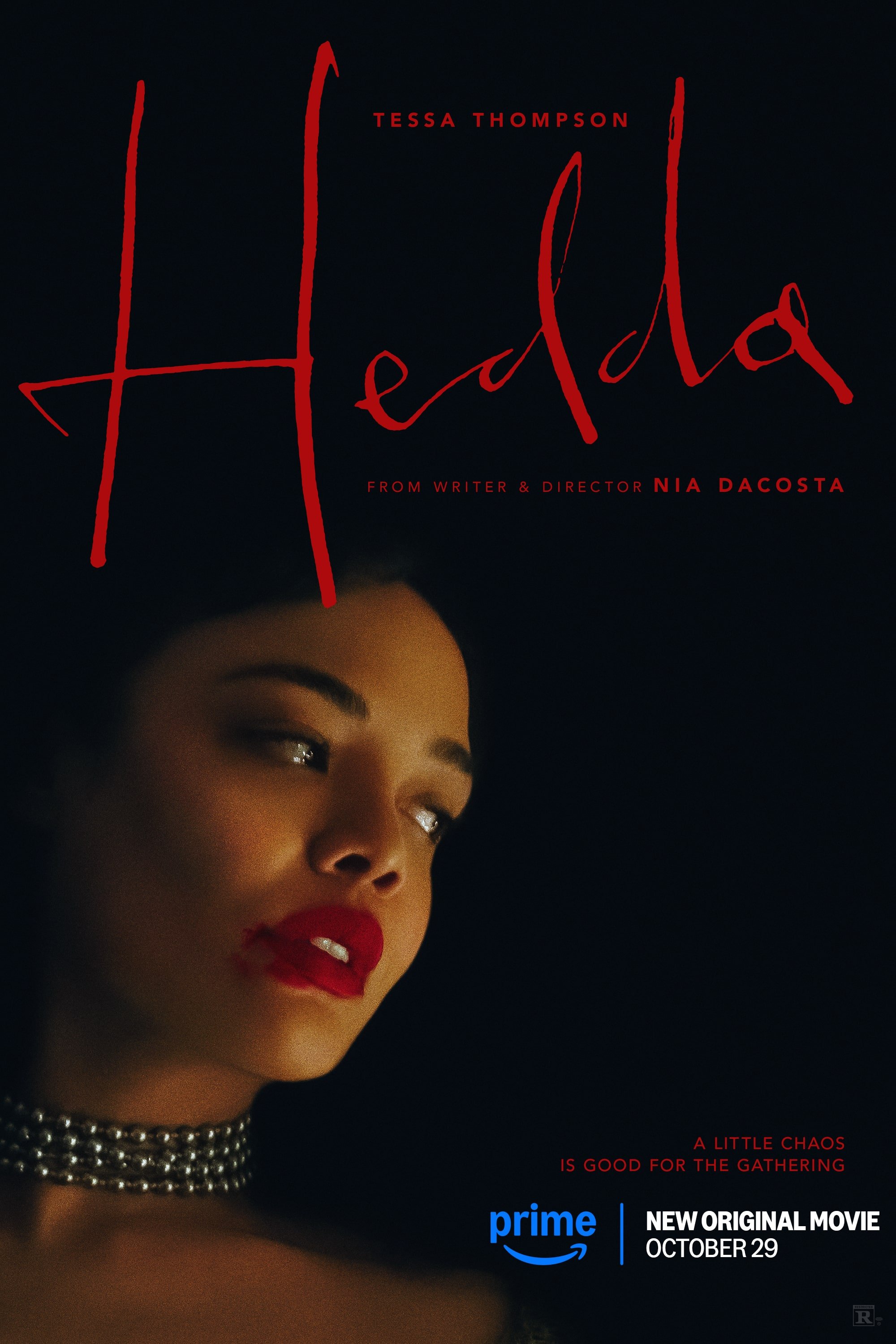
'Hedda' Is a Slight Cut Above The Typical Evil Rich People Movie
Nobody likes the rich, except people trying to get ahead and other rich people. The kill the rich theme has been done to death in movies. Especially lately, since economic inequality has increased significantly and will get worse. Eat the rich will remain a prevalent theme in cinema until the orange man in charge censors that too. Whether it's Saltburn or Triangle of Sadness, it's fun to watch the upper 1% squirm. Yet, is there anything that makes Hedda different than the other evils of the affluent members of society flicks? Actually, yes!
Nia DaCosta was the right woman for this job. Where most directors would have made a simple white-folks-as-the-devil film, DaCosta breaks the magical black-friend angle. Usually, movies about any type of folks, but especially rich ones, always have the white people portrayed as evil, while the blacks are good. DaCosta tosses that out the window, showing the evil people contain when consumed with power. Whether you're black, white, Asian, Latino, or Native American, it doesn't matter. Money will reveal whether the lucky recipient has hubris. Sadly, usually they do.
As much as society is decent as a whole, once money comes into the equation, people tend to often change for the worst. Whether it be the evil Republicans in Congress or the coward Democrats who pretend like they care, then lick the boot of their shareholders behind closed doors. Wealth breeds corruption. The reason white people have the most power is due to their early colonization. DaCosta examines whether people like Christopher Columbus, who "discovered" America by force, would behave differently if the roles were reversed. Unfortunately, probably not. Who's to say if Columbus was black and the indigenous people were white, he still wouldn't torture and murder them? Just look at folks like Judge Clarence Thomas as a prime example of a terrible black man in power. It's not skin color that makes us monsters; it's opportunity that reveals our true selves.
If you think I'm overexamining the film's race angle, just read or watch interviews from the director herself. The protagonist in the film is a lighter-skinned black woman who could pass for white, which makes sense, since Tessa Thompson starred in the overlooked Passing. Hedda Gabler's pigmentation allows her to thrive in the world. Rather than being content with her good fortune, Hedda wants it all, not sharing it with a soul. Being a wealthy black woman in the final years of the 1800s is no small feat. All that success must have gotten to Hedda's brain since she gaslights everyone around her. Her best friend, Eileen Lovborg (Nina Hoss), is a particular target, as Hedda does everything in her power to discredit her while pretending to be her friend. There's only one other black person within these higher echelons who seems to be a decent person. But is he?
Aside from turning the switch on the race roles, Hedda could use a little bit of work. Its buildup is warranted at the beginning, but by golly, it's slow. Anyone tuning in to the film on Amazon Prime might switch off early, missing much of the picture's great societal commentary. Also, why is Hedda the way she is? Why can't she let anyone else be successful or happy? It's easy to just say that because she's rich, she's selfish. No, that's shortcut writing. Even someone with as little backstory as Daniel Plainview in There Will Be Blood had some trauma that showed why he indiscriminately hates people. Just a vague reference relating to anything indicating why Hedda has narcissistic personality disorder would have further enriched her character. These are small complaints for an otherwise impressive film.
Although based on a 1891 play, Hedda doesn't behave like a play-movie. It's not Glen Gary Glen Ross or Doubt. Although those movies are fantastic in their own right, they're very monologue-driven. Hedda does have some dialogue; however, the film is much more visual. The estate the movie takes place in is gorgeous, yet it's lit with a harsh contrast ratio, with the greens and oranges intentionally oversaturated to create a sense of unease. Hedda's mansion looks more like a lavish prison of the mind than a sprawling, gorgeous building. The score also has a kinetic pace to it that keeps you awake during the sleepy first act. As for the performances, they're awesome.
Tessa Thompson does a convincing job of playing a reserved, manipulative psychopath. She seems okay on the outside. Even when she reveals her true colors, Thompson plays the character with restraint so she can convince everyone that her lies are valid. Nina Hoss's Eileen has to show a ton of emotion. Hoss's range from decency to madness, to depression, is an eyebrow raiser. As is Imogen Poots playing Thea Clifton, who's the voice of empathy and reason in the film. She could have easily been boring to watch, but Poots keeps an otherwise forgettable moral character, fascinating to watch. Nicholas Pinnock as Judge Roland Brack may not catch your attention at first, but oh, just wait.
With a little more work in the editing room and motivation other than greed from Tessa Thompson, Hedda could be even more notable than it already is. Nia DaCosta's soft reboot of Candyman was a reaffirming horror sequel that left incel racists raging, which brings a smile to my face. Her work on The Marvels was atrocious, raising my doubts about her directing 28 Years Later: The Bone Temple. Luckily, Hedda solidifies that Nia DaCosta is no flash-in-the-pan filmmaker or visionless rent-a-director. She has an admirable voice, style, and eye. As long as she stays away from Marvel, she could have a very bright career.
Hedda is heading to Prime tomorrow, October 9.


