"Wuthering Heights" Doesn't Reach High Enough
Sometimes reading the book can ruin a movie. Other times, just having general knowledge of the source material can tank the film as well. Coming from the viewpoint of a testosterone-driven American, I did not know “Wuthering Heights” until mere moments before the movie started. Without any prior nostalgia or knowledge of the material, the picture felt like a half measure. Which is a shame, considering how Emerald Fennell likes to go for the gut. Yet hear, something is holding her back. The film is not your typical love story. It’s more of a twisted Jane Austen novel about wretched people who should not be idolized, yet the movie tries to force us to like them when there’s simply nothing to like. So why not make them a little more monstrous?
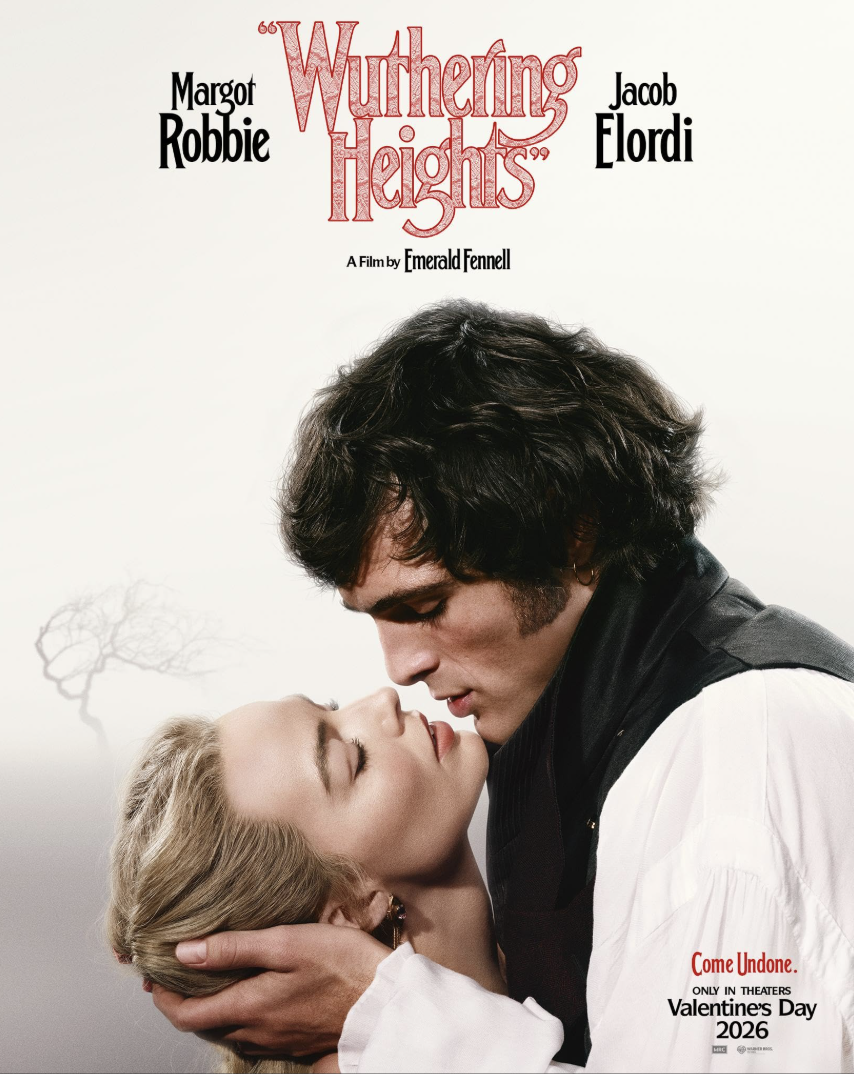
This is a story about the real shades of color people inhabit, how we’re greedy, selfish, pigs who will do anything to get the attention of a rich man or woman who can us to their castle. It’s a very pessimistic picture whose viewpoints I can only partially agree with. When the film is at its strongest, it’s also at its most absurd, like when one character is chained up and behaving like a dog to satisfy their master. The film doesn’t know if it wants the audience to love or hate its characters. Either that’s intentional or unintentional and entirely unclear. Heathcliff (Jacob Elordi) and Catherine Earnshaw grow up in an abusive household. Yet, if it weren’t for Catherine’s father’s generosity in adopting Heathcliff (whom Cathy names), would the two have not bonded together?
Both victims of intergenerational trauma the two survive because of each other. However, at one point, Heathcliff becomes increasingly distant as he lives as a beggar while Catherine has married a rich man. Heathcliff resents Catherine for living a life he dreams of having. Yet, at a certain point, he does quite well for himself. It’s not until that point that Catherine realizes that she actually loves this oaf who may actually be pretending that he’s doing quite well, yet it never dawns on her. Even though our two protagonists are victims of an abusive parent, it doesn’t excuse the fact that they’re deplorable to watch.
Catherine is the Scarlett O’Hara of the movie. A spoiled little brat who doesn’t know when to be grateful for what she has or run to what her heart desires. Margot Robbie cries so much in the film that one of her servants points it out to her. As a woman who went from rags to riches, Catherine is a self-absorbed monster who mistreats those who were once in her position. The only one who’s just as toxic as her is Heathcliff. In fact, Heathcliff is worse. Heathcliff knows he’s tall and good-looking, so he uses it to his advantage, attracting any women he can to make Cathy jealous. He’s an attractive copy of his stepfather, who gets off on cruelty.
Emerald Fennell is saying that people who’ve been abused recycle that abuse onto others when they become older. Yet the message needed a stronger hook. Apparently, in the novel, Heathcliff is a borderline rapist who exhibits no redeemable values. If that’s the case, it would have made for a much stronger narrative. How could Emerald Fennell of all people miss the mark? Unless it was a demand from Warner Bros to make the movie more approachable as a romance to meet expected ticket sales. Despite the impressive contemporary soundtrack, gorgeous cinematography, stunning set design, and a strong lead performance from Margot Robbie, this “Wuthering Heights” may wither from your memory after seeing it. This doesn’t feel like an Emerald Fennell movie. This feels like a studio compromise that results in an interesting, if not overly long and redundant, adaptation.