'Behemoth!' Needs More Crescendos
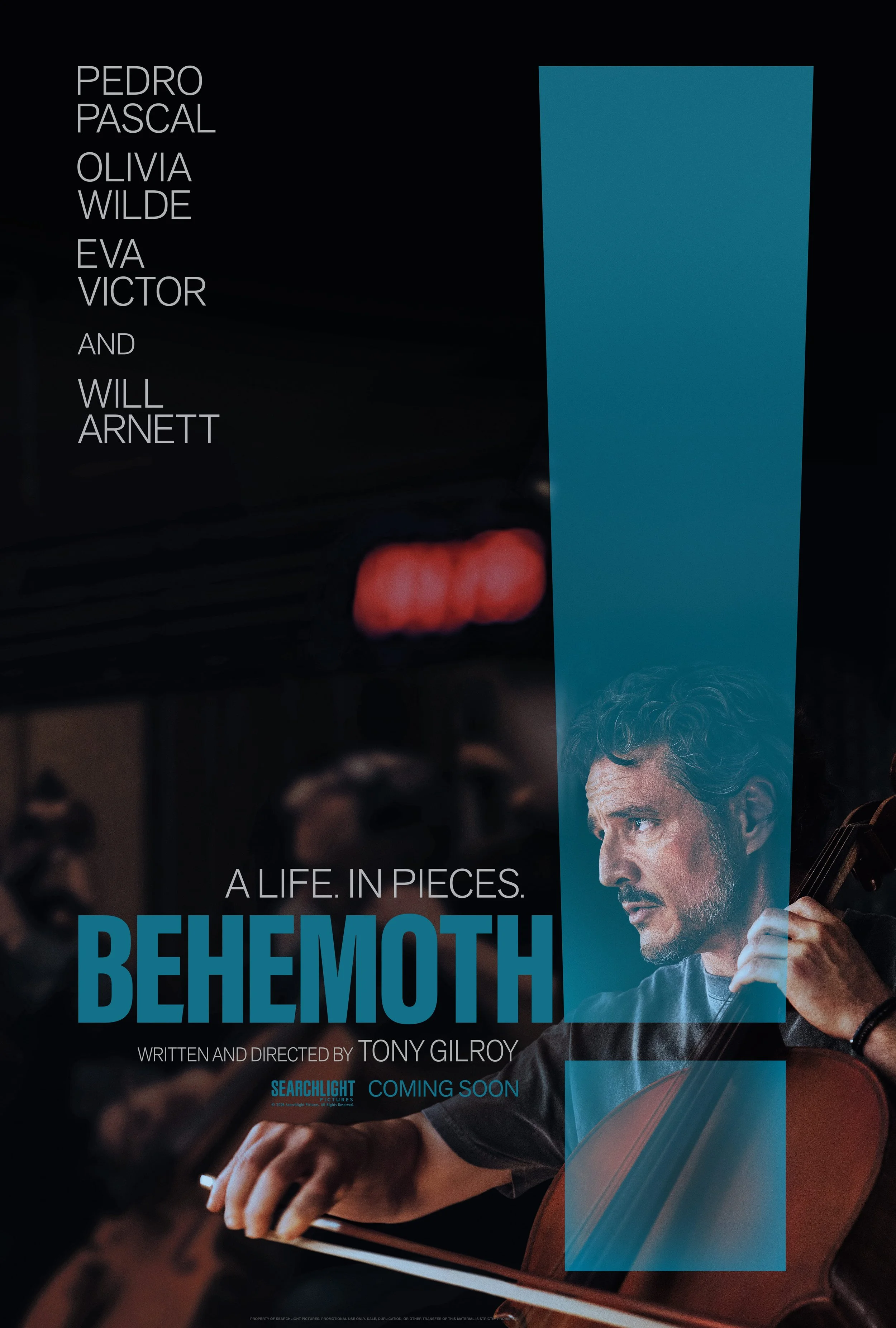
For a movie about film scores, Behemoth! has no memorable songs. Most are generic click tracks to match the on-screen action. Writer/Director/the best thing to ever happen to Star Wars, Tony Gilroy leaves a major IP to tell a more contained story. Perhaps a bit too contained, as Behemoth! can be sluggish. Even for intentionally slow cinema, Behemoth can be a bore-hemoth with its stop-and-go structure. Although driven by music, the score is almost nonexistent for large chunks of the movie, which could have benefited from something to drive its imagery and themes home harder. If you don’t know already, Tony Gilroy is a writer. Not a director. Unlike Aaron Sorkin, however, Gilroy is a more competent director behind the chair when stepping out of his comfort zone. Although Behemoth! might be slow, its payoffs make up for some of it.
Behemoth! starts with a scene that feels inconsequential. Yet, it’s the entire structure of the movie. Alex Serian (Pedro Pascal) arrives for a rehearsal. He’s a cellist. A very well-respected one, working among other colleagues. The movie revolves around this scene, as it’s about how music composes our lives. When we walk into a room, whatever music is on our headphones affects our mood. It’s a person’s low-key way to self-aura farm. You know that feeling. You walk into work with tension-filled music giving you that feeling of urgency to get jacked for whatever fires you need to put out that day. Maybe you’re at a gym listening to Gladiator or Bane’s chant from The Dark Knight Rises. Or maybe you’re into rap and need DMX to keep your blood pumping when low on energy. Life is a soundtrack. There’s a reason music has existed since the earliest days of humanity. Still, although this picture is about music, it's oddly sparse when it needed to be more present.
If you read the picture’s premise, you’d assume it’s a two-hour musical montage. It’s not. Tony Gilroy might not have the technical skills to make a montage flick, and it shows. Although the picture isn’t designed for people with rotted ADHD brains, it feels almost too basic at times, and the story can be a real snoozer. It’s understandable; Gilroy is trying to make a film more about character building than sensationalism. But if the premise and structure of the picture are about a cellist reflecting on his life during one session, the film could benefit from drawing on other directors who know how to manipulate time. Couldn’t Tony have given Christopher Nolan a quick ring? Tony Gilroy’s natural talent is writing. When it comes to character nuance, Gilroy does a fine job of fleshing them out.
The picture works best when it deals with complexity. Specifically, Alex’s relationship to women. Alex is a playboy. He goes through women like tissue. However, when we learn why he’s so impersonal, a lot of things make sense. We can understand why Alex cheats and how he hooked up with a crazy woman (played by Oliva Wilde) who won’t stop clinging to him. Alex’s actions lead to what could be his greatest regret by the end of the picture. However, it doesn’t need to be a regret. He still has time to make things right. Unfortunately, we know he likely won’t take the harder road, as he’s too self-absorbed in his career to care about anything else.
Behemoth! is a writer’s movie with a pretty good script, but it pales in comparison to Gilroy’s other work. Much of what could improve its narrative is missing. Luckily, there’s enough subtext to make for an interesting character piece. Just not a fascinating one. The picture shines the most when we dive into Alex’s past. Alex might be a nepo baby, and his verbally abusive father, Peter (Hank Azaria), certainly lets his son know that he wouldn’t be anything without his old man’s network pull. These areas aren’t explored enough, as most of the picture is just a series of setups for a weepy final payoff.
Pedro Pascal gives an okay, rounded performance, but it’s the supporting cast who stand out the most. Azaria’s one scene is brilliant. He plays the tortured, abusive father down to a T. Olivia Wilde is instantly believable as the mad stalker. And Will Arnett (who plays Alex’s brother) once again shows his acting chops this year. Arnett is great as the lovable midlife-crisis guy. Pedro Pascal plays his role very cordially, as he’s not playing a character who gets upset much. The role requires a lot of reactionary acting, which Pedro is fine at but can’t quite nail, making many scenes feel too dry.
The film’s best moments are at the end. Unfortunately, they come a bit too late, when they should have been more central to the story. Much of the plot requires patience. Unfortunately, not all of that patience is worth it. One scene will have you leaning toward your chair; the next, you’ll be wanting to check the time. If not for the few great moments that will elicit many to reach for their tissues during the finale, this film could have been a misfire. It’s certainly the weakest of Tony Gilroy’s work. But even at his most flawed, Gilroy taps into that little part of the imperfect human spirit that few others can.