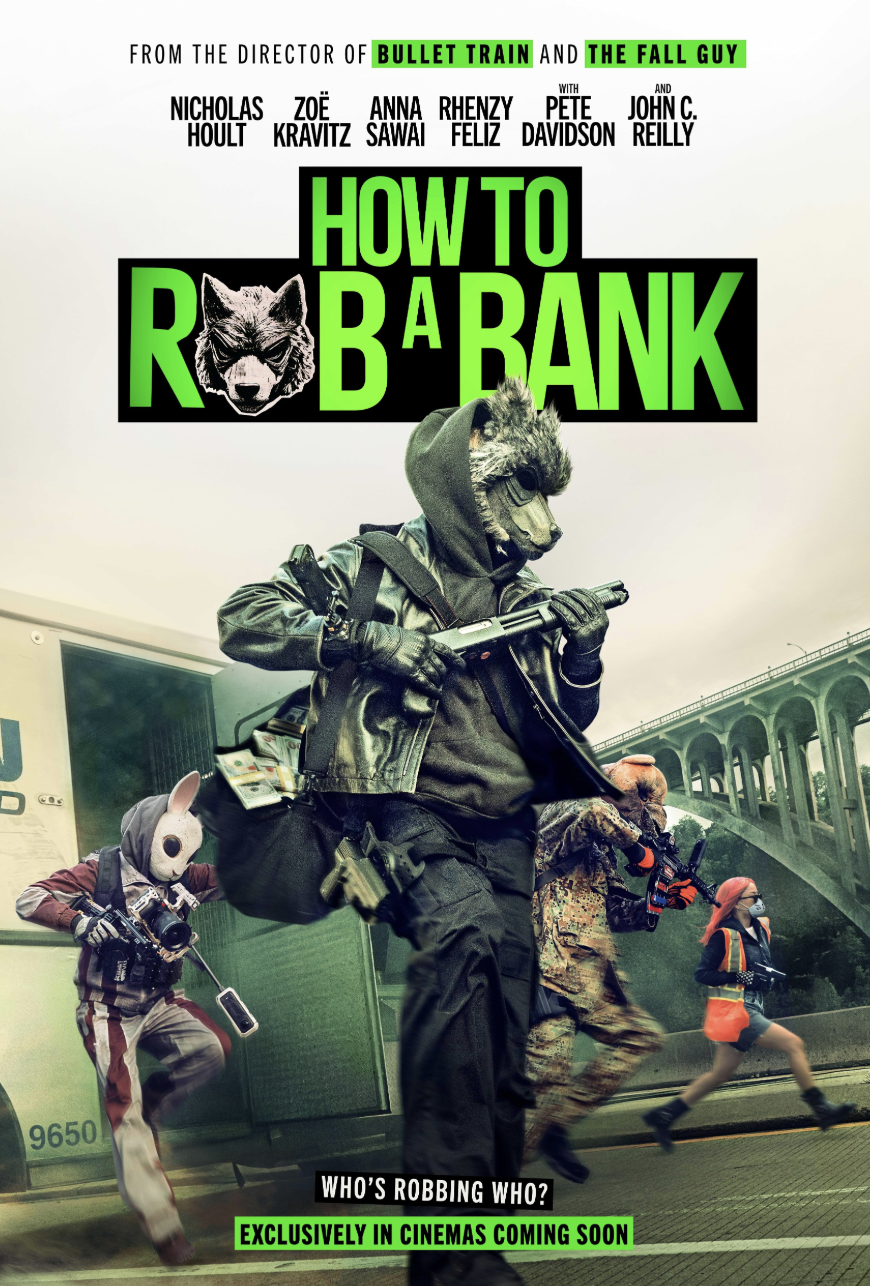
'How to Rob a Bank' Knows How to Bore an Audience
Its dull conventions run wild. How to Rob a Bank tries hard to hold the audience’s attention with more montages than a Rocky movie, but it falls flat under the weight of numbing repetition. HTRAB is a fight-the-system movie that does little to fire anyone up. It’s an example of when clichés fail. Heck, that’s why critics use cliché as a semi-slang term in the first place. Clichés work when the story is meant to be predictable. Or when the narrative uses conventional elements yet still pulls the rug out from under the viewer’s feet. There’s little to no rug-pulling in this movie, and it desperately needed it.
How to Rob a Bank could have been written by AI. It has all the elements of a heist film, and even the most cinematically inept viewer can see where each act is going from a mile away. We know the antihero will either win in the end. We know the cop will catch him. And we basically know everything before the next act comes up. The movie isn’t terrible. Just forgettable. It will get lost in the pile of heist films that will pop up on Amazon. At the very least, the movie has some awesome action.
Although the story is weak, much of the action in this picture is good old-fashioned Hollywood filmmaking. Director David Leitch keeps the camera wide, letting the audience see all the car crashes. Even the hand-to-hand combat is shot with wide shots, with limited cutting. It’s clear when a digital car is getting wiped out compared to a real one. In this flick, real cars are trashed instead of cartoon ones. For the action, the movie is a win. By the third act, things really heat up as the picture takes on a Joker-like narrative. Unlike that movie, these characters feel more like archetypes than people.
The flick thinks it’s smarter than it is. The cast’s characters are mostly nameless because screenwriter Mark Bianculli thinks he’s being clever, when in reality he probably couldn’t find a good name for each person. Nicholas Hoult is running an incredibly successful social media campaign, gathering 30 million views. He edits videos and live-streams his bank heists while wearing a werewolf mask to conceal his identity. Suspending one’s disbelief is enough, but it’s hard to believe anyone who’s posting about their crimes isn’t caught instantly. The film is called How to Rob a Bank, but its premise of bank robbers posting their crimes online is ridiculous. Even if the robbers intentionally leave their phones somewhere else while they steal, it's dumb. Your metadata would instantly get you snagged within your first heist. So right away, the movie's premise is an eye-roller.
The criminals in this film aren’t very interesting. They have the same problems you'd see in an episode of Law & Order. They’ve been screwed by the system and want to give back to the people the big banks have ripped off. They steal from the rich to give to the poor. Yet, if you’re robbing banks, you’re already taking from the poor to redistribute your earnings to the people you stole from. So what’s the point? I get it. Capitalism is a 1% system. But what these characters are doing is antithetical to their Robin Hood cause.
The narrative of this film is the same as a lot of other " fight the system” plots. What makes it different or engaging is nothing other than its action shots. The film features characters with problems similar to those in a million other pictures. Whether it be a dead kid or a mountain of debt. We get why these people do what they do, but they're so much of an archetype that it makes a movie that’s trying to feel like an adrenaline rush feel more like a drag. The movie doesn’t know which character or situation to focus its heart on. Its structure is a YouTube montage mess.
By the final payoff, you may have already fallen asleep during its most crucial moments. Despite the impressive action, do yourself a favor and watch Heat instead. Or wait for this movie to appear on streaming. Social media has created a certain rage and apathy in society. Instead of exploring how Facebook and YouTube have made us heartless, the director engages with simplistic, dull, predictable conventions and, yes, that dreaded word: clichés. Speaking of repetition, stop casting Pete Davidson in boring movies about criminals. It’s a guaranteed way to lose your audience before they even see the film.