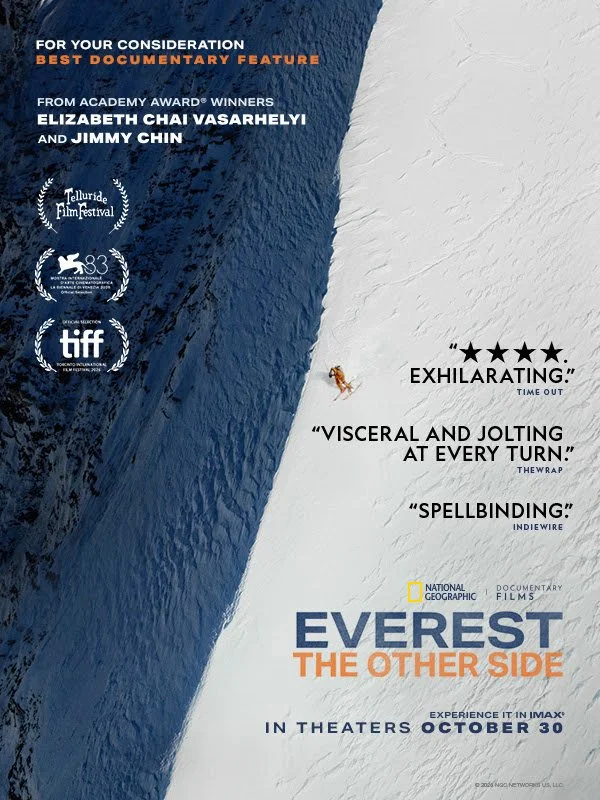
'Everest: The Other Side' is a Rocky But Thrilling Ride
You can’t stop thrill-seekers from doing what they do. Their lifestyles aren’t condonable, especially when children are involved. Yet it’s understandable why they do it. Average everyday life can be soul-crushing. How many people have wasted their lives stuck in a cubicle? Thrill seekers grab life by the throat and live on its edge. If they die, at least they die living a full life. They live in a mindset that doesn’t fear death. For once, we get a documentary that tackles that issue more directly than many other docs. Yet, is it enough?
Everest: The Other Side deals with the mentality and consequences of tackling the impossible. This movie needs to be seen in IMAX. It takes the audience back to the Chicago Navy Pier IMAX dome days, when viewers were surrounded by stunning imagery that you can’t recapture at home unless you’re a billionaire with an IMAX in your basement. The helicopter shots of Everest are far more engulfing than James Cameron’s computerized Pandora. From the mountain smoke to the vast terrain, the visuals are breathtaking. However, if you’re prone to motion sickness, it’s best to bring some Dramamine before you head into the theater.
Directors Jimmy Chin and Elizabeth Chai Vasarhelyi capture every angle imaginable as they climb with the climbers. They show the audience why real filmmaking will beat anything AI produces. What’s captured on camera is captivating. You feel like you’re on Mount Everest. But it can be a little dizzying. Since so many angles are run-and-gun with no stabilizing gimbals, the camera shakes a lot. Especially the GoPros mounted on the climbers' heads. If simply watching someone climb can make you feel sick, imagine actually doing it. Many folks can’t. An artist's determination to put their life on the line is admirable. What really separates this National Geographic documentary from others is how directly mortality is confronted.
Jim Morrison chooses to climb the other side of Mount Everest. Not only is Jim crazy enough to climb Everest, but he wants to ski down it. The Hornbein Couloir faces north of Everest, with a gully steep enough for someone to ski down if they enjoy suicide. His wife, Hilaree Nelson, helps Jim on his mission. The two have children. They decide to do this anyway, which brings up the most divisive part of the picture. These parents have children. Don’t they care about what happens to them if one or both of them were to die? At a certain point, you have to stop thinking about yourself and other people.
Jim and Hilaree take their kids on expeditions. However, some of the children don’t particularly like these trips. They’re practically forcing their passions on their kids without letting their kids do something normal. Without spoiling the movie, the worst imaginable thing does happen. At one point, you would think Jim would learn from these tragic life lessons, yet he keeps climbing. Whether it's selfishness, idiocy, or both, the movie tackles these complicated mindsets. Everyone who takes these expeditions knows the risks and has experienced them. At one point, co-director Elizabeth Chai Vasarhelyi asks director Jimmy Chin why they keep doing this if these things still happen. Outside of documenting the dangerous, being their only source of income, it’s because life is short. So embrace it. Jim Morrison climbs because that’s what his loved ones want. Well, maybe not the kids. They support their dad, but the film doesn’t dig deep enough into what they really think.
Second, the film has some structural issues. Although this isn’t just Jim and Hilaree’s story, the picture gets a little lost documenting other climbers, which hinders the film's traction by adding too many characters. We learn about Jim’s first partner halfway through the picture, when it really should come at the beginning. The picture offers an almost too-simple answer for why these people are willing to leave their loved ones behind. We get it. Life can suck, so why not make it worth living? It comes at a cost, but it’s worth the ride. But this isn’t really explained; the audience is just supposed to get it.
Even if most people don’t get the morality behind Jim’s choices, he’s still a good man who’s doing something incredible. Few docs capture the most pivotal part of the movie’s story on camera. It’s respectfully and admirably done. When filmmakers risk everything, the results show. The movie is exhilarating and frustrating. But it is a winner. You could certainly wait for Everest: The Other Side to be streamed. But you’d miss out on a cinematic experience, which is why we go to the movies. Dreams are worth manifesting. Sometimes you have to make sacrifices to accomplish those dreams. Are they worth it when it comes at the expense of others? According to this film, yes. But you may feel differently. Even if you do, there’s no denying Jim’s emotional journey is one anyone could feel.